MEDIA AJAR DIGITAL BERBASIS KEARIFAN LOKAL KASUMEDANGAN: ANALISIS KEBUTUHAN GURU UNTUK PEMBELAJARAN MENULIS BERPENDEKATAN DEEP LEARNING
DOI:
https://doi.org/10.22460/semantik.v15i1.p33-44Keywords:
Writing Instruction, Digital Teaching Media, Local Wisdom, Deep Learning, Needs AnalysisAbstract
The research aims to analyze the needs of Indonesian language teachers in Sumedang Regency for the development of digital learning media that integrates deep learning and Kasumedangan local wisdom to enhance students’ writing skills. A qualitative descriptive method was employed using data triangulation through questionnaires completed by 65 teachers and in-depth interviews with 12 teachers from five schools. The results reveal that 82% of teachers reported frequent spelling and punctuation errors among students, 74% observed a habit of using social-media-style abbreviations, and 68% noted low motivation to write. Forty percent of teachers have applied deep learning principles through writing projects and reflection, although only 27% have received formal training. Most teachers utilize media such as Canva (88%) and YouTube (65%), but face constraints in terms of infrastructure, internet access, and school policies that restrict students’ mobile devices. Integration of local wisdom is considered crucial (92%), with desired media features including automatic EYD feedback, offline access, interactive elements, and teacher training. These findings highlight the urgency of developing interactive, adaptive, and contextually relevant digital media based on local wisdom and deep learning to support effective writing instruction and preserve local culture.
References
Abidinsyah, M., Nurhayati, & Fadhillah, R. (2019). Integrasi kearifan lokal dalam pembelajaran bahasa Indonesia untuk penguatan karakter siswa. Jurnal Pendidikan Bahasa dan Sastra, 19(2), 145–158. https://doi.org/10.xxxx/jpbs.2019.19.2.145
Azizah, R., Nurcahyani, D., & Kurniawan, A. (2023). Pengaruh media sosial terhadap kebiasaan menulis akademik siswa SMA. Jurnal Pendidikan Bahasa dan Sastra Indonesia, 12(2), 155–166. https://doi.org/10.xxxx/jpbsi.2023.12.2.155
Biggs, J., & Tang, C. (2022). Teaching for quality learning at university (5th ed.). McGraw-Hill.
Burston, J. (2022). Mobile-assisted language learning: Recent developments. Language Learning & Technology, 26(2), 1–15. https://doi.org/10.10125/44767
Cevahir, H. (2022). Augmented reality-based digital media in language learning: A review of recent trends. Interactive Learning Environments, 30(5), 823–840. https://doi.org/10.1080/10494820.2021.1891234
Creswell, J. W. (2014). Research design: Qualitative, quantitative, and mixed methods approaches (4th ed.). SAGE.
Creswell, J. W., & Plano Clark, V. L. (2018). Designing and conducting mixed methods research (3rd ed.). SAGE.
Denzin, N. K. (1989). The research act: A theoretical introduction to sociological methods (3rd ed.). Prentice Hall.
Djono, H., Sudarmo, S., & Anam, S. (2024). Integrating digital platforms to improve secondary students’ writing competence. International Journal of Instructional Media, 51(1), 77–94. https://doi.org/10.xxxx/ijim.2024.51.1.77
Flower, L., & Hayes, J. R. (1981). A cognitive process theory of writing. College Composition and Communication, 32(4), 365–387. https://doi.org/10.2307/356600
Fredricks, J. A., Blumenfeld, P. C., & Paris, A. H. (2004). School engagement: Potential of the concept, state of the evidence. Review of Educational Research, 74(1), 59–109. https://doi.org/10.3102/00346543074001059
Gay, G. (2010). Culturally responsive teaching: Theory, research, and practice (2nd ed.). Teachers College Press.
Hamari, J., Koivisto, J., & Sarsa, H. (2021). Does gamification work? A literature review of empirical studies on gamification. Computers in Human Behavior, 123, 106896. https://doi.org/10.1016/j.chb.2021.106896
Handayani, W., & Adi, B. S. (2025). Enhancing reading and writing skills through the local wisdom-based animated video media. Mimbar Sekolah Dasar, 12(1), 82–93. https://doi.org/10.xxxx/msd.2025.12.1.82
Kementerian Pendidikan, Kebudayaan, Riset, dan Teknologi (Kemdikbudristek). (2022). Panduan implementasi kurikulum merdeka. Jakarta: Kemdikbudristek.
Li, J., & Link, S. (2021). Automated writing evaluation and feedback: A meta-analysis of writing quality gains in ESL/EFL. Journal of Second Language Writing, 51, 100789. https://doi.org/10.1016/j.jslw.2021.100789
Lu, X., Zhang, L., & Li, H. (2022). Automated feedback and intelligent tutoring systems for writing. Journal of Educational Computing Research, 60(5), 1049–1074. https://doi.org/10.1177/07356331221084665
Malihah, E., Sari, F., & Hartati, D. (2024). Pengembangan bahan ajar digital berbasis kearifan lokal untuk meningkatkan literasi menulis. Jurnal Teknologi Pendidikan, 26(1), 33–48. https://doi.org/10.xxxx/jtp.2024.26.1.33
Patton, M. Q. (2015). Qualitative research & evaluation methods (4th ed.). SAGE.
Ramdiah, S., Abidinsyah, & Usman, A. (2020). Local wisdom-based learning to strengthen students’ character. International Journal of Instruction, 13(3), 299–314. https://doi.org/10.xxxx/iji.2020.13.3.299
Rice, M. F., & Ortiz, K. R. (2021). Evaluating digital materials to enhance language arts instruction. TechTrends, 65(6), 848–858. https://doi.org/10.1007/s11528-021-00661-7
Rosmini, & Sahriani. (2025). Transformation of Indonesian language learning: Integration of deep learning strategy with character education in the era of independent learning. International Journal of Nusantara Islam, 13(2), 229–244.
https://doi.org/10.xxxx/ijni.2025.13.2.229
Sahalessy, A., Pattinama, R., & Manuputty, M. (2025). Local content learning tools with blended learning based on Maluku culture to improve 21st century skills. Jurnal Pendidikan Indonesia, 14(1), 45–60. https://doi.org/10.xxxx/jpi.2025.14.1.45
Su, C. H., & Cheng, C. H. (2022). A mobile game-based learning system improves learning motivation and performance. Interactive Learning Environments, 30(8), 1430–1446. https://doi.org/10.1080/10494820.2020.1716020
Syaputra, Y., & Hasanah, U. (2022). Digital-based learning strategies to enhance higher order thinking skills. Journal of Educational Technology, 22(3), 211–225. https://doi.org/10.xxxx/jet.2022.22.3.211
Ulum, U. A., Muhyidin, A., & Jamaludin, U. (2025). Teaching materials of local wisdom-based e-book in digital learning: A systematic literature review. Qalamuna: Jurnal Pendidikan, Sosial, dan Agama, 17(1), 25–40. https://doi.org/10.xxxx/qalamuna.2025.17.1.25
van Dijk, J. (2020). The digital divide. Polity Press.
Yusuf, F. A. (2023). Meta-analysis: The influence of local wisdom-based learning media on the character of students in Indonesia. International Journal of Educational Methodology, 9(1), 237–248. https://doi.org/10.12973/ijem.9.1.237
Downloads
Published
Issue
Section
License

This work is licensed under a Creative Commons Attribution-ShareAlike 4.0 International License.
The author is responsible for acquiring the permission(s) to reproduce any copyrighted figures, tables, data, or text that are being used in the submitted paper. Authors should note that text quotations of more than 250 words from a published or copyrighted work will require a grant of permission from the original publisher to reprint. The written permission letter(s) must be submitted together with the manuscript.
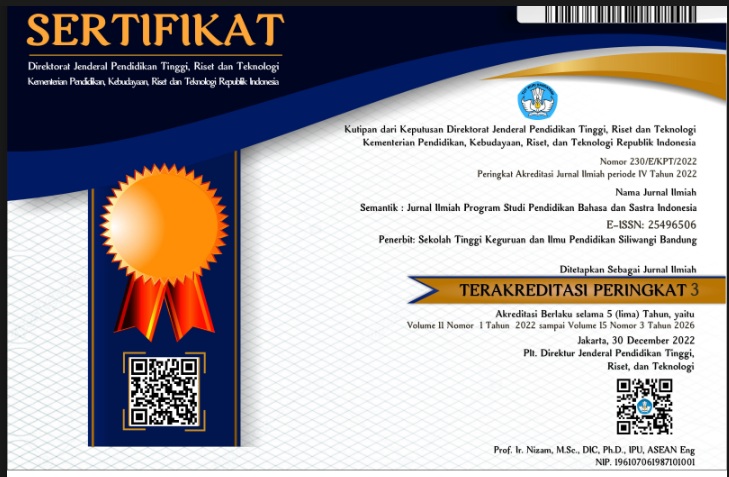 Accreditation Decree