
Types of mathematical difficulties experienced by secondary school students in problem solving
##plugins.themes.bootstrap3.article.sidebar##
##plugins.themes.bootstrap3.article.main##
Abstract
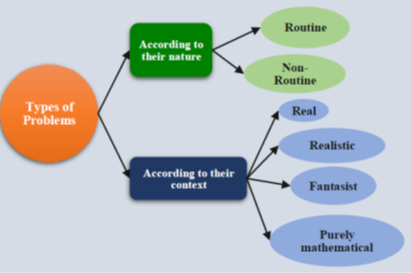
Throughout the history of scientific knowledge development, we can find a wide variety of difficulties that, although potentially error-prone, have contributed to the advancement of science. This study was conducted with the aim of identifying pupils’ performance and the difficulties in solving types of mathematical problems contextualized to the quadratic function and constitutes a descriptive-quantitative study. The data were obtained from 304 secondary school students in two regions of Chile, using a problem-solving test. According to the results, the greatest difficulties were found in the complexity of mathematical objects and mathematical thinking processes, surpassing the difficulties associated with teaching processes with which they were compared. With regard to the types of problems defined according to their nature and context, the lowest performance was obtained in non-routine problems and the highest was found in routine problems and those of a fantasist and purely mathematical nature. The results provide information for future research and encourage changes in school practice, which should take into account overcoming difficulties by eliminating them or by exploring their potential.
##plugins.themes.bootstrap3.article.details##

This work is licensed under a Creative Commons Attribution-ShareAlike 4.0 International License.
The author is responsible for acquiring the permission(s) to reproduce any copyrighted figures, tables, data, or text that are being used in the submitted paper. Authors should note that text quotations of more than 250 words from a published or copyrighted work will require grant of permission from the original publisher to reprint. The written permission letter(s) must be submitted together with the manuscript.References
Achmetli, K., Schukajlow, S., & Rakoczy, K. (2019). Multiple solutions for real-world problems, experience of competence and students’ procedural and conceptual knowledge. International Journal of Science and Mathematics Education, 17(8), 1605–1625. https://doi.org/10.1007/s10763-018-9936-5
Agustyaningrum, N., Abadi, A. M., Sari, R. N., & Mahmudi, A. (2018). An analysis of students’ error in solving abstract algebra tasks. Journal of Physics: Conference Series, 1097(1), 012118. https://doi.org/10.1088/1742-6596/1097/1/012118
Azzolina, Y. A., Saldivia, F., & Maglione, D. (2019). Un posible abordaje para enseñar función cuadrática en un ambiente tecnológico [A possible approach to teaching quadratic functions in a technological environment]. Informes Científicos Técnicos - UNPA, 11(3), 15–32. https://doi.org/10.22305/ict-unpa.v11.n3.795
Baybayon, G. G., & Lapinid, M. R. C. (2024). Students’ common errors in quadratic equations: Towards improved mathematics performance. Infinity Journal, 13(1), 83–98. https://doi.org/10.22460/infinity.v13i1.p83-98
Cheeseman, J., Clarke, D., Roche, A., & Wilson, K. (2013). Teachers' views of the challenging elements of a task. In Proceedings of MERGA 36 Annual Conference of the Mathematics Education Research Group of Australasia, (pp. 154–161).
Csapó, B., & Funke, J. (2017). The nature of problem solving: Using research to inspire 21st century learning. OECD Publishing. https://doi.org/10.1787/9789264273955-en
Daroczy, G., Wolska, M., Meurers, W. D., & Nuerk, H.-C. (2015). Word problems: a review of linguistic and numerical factors contributing to their difficulty. Frontiers in psychology, 6, 00348. https://doi.org/10.3389/fpsyg.2015.00348
Di Blasi Regner, M., Espro, F., Lois, A., & Milevicich, L. (2003). Dificultades y errores: Un estudio de caso [Difficulties and errors: A case study]. In R. Abrate, M. Pochulu, & J. Vargas (Eds.), Errores y dificultades en Matemática (pp. 31–34). Universidad Nacional de Villa María.
Díaz, V. (2020). Difficulties and performance in mathematics competences: Solving problems with derivatives. International Journal of Engineering Pedagogy (iJEP), 10(4), 35–53. https://doi.org/10.3991/ijep.v10i4.12473
Díaz, V., & Flores del Río, G. (2022). Resolución de tipos de problemas contextualizados y análisis de errores: Un estudio de casos [Resolving contextualised problem types and error analysis: A case study]. Estudios pedagógicos (Valdivia), 48(2), 9–34. https://doi.org/10.4067/s0718-07052022000200009
Díaz, V., & Flores, G. (2025). Resolución de tipos de problemas rutinarios y no rutinarios contextualizados a la función cuadrática [Solving routine and non-routine problems contextualised to the quadratic function]. Paradigma, 46(2), e2025036. https://doi.org/10.37618/PARADIGMA.1011-2251.2025.e2025036.id1624
Díaz, V., Hernández-Díaz, A., & Oval, C. (2025). Problem solving in engineering careers: Mathematical competences and types of errors. Journal of Lifestyle and SDGs Review, 5(3), e04911. https://doi.org/10.47172/2965-730X.SDGsReview.v5.n03.pe04911
Díaz, V., & Poblete, A. (2001). Categorizando tipos de problemas en álgebra [Categorising types of problems in algebra]. Uno: Revista de didáctica de las matematicas, 27, 93–104.
Díaz, V., & Poblete, Á. (2019). Competencias matemáticas: Desempeño y errores en la resolución de problemas de límites [Mathematical skills: Performance and errors in solving limit problems]. Paradigma, 40(1), 358–383.
Esquer, M. P., Robles, A., Cosmes, S., & Ansaldo, J. (2017). Didactic proposal with quadratic functions of problems in context at a higher level. In F. Rodríguez & R. Rodríguez (Eds.), Memoria de la XVII Escuela de Invierno en Matemática Educativa (pp. 376–381). Red Cimates.
Fitrianna, A. Y., & Rosjanuardi, R. (2021). Identification of junior high school students’ error types in understanding concept about relation and function. Infinity Journal, 10(2), 175–190. https://doi.org/10.22460/infinity.v10i2.p175-190
Gavaz, H. O., Yazgan, Y., & Arslan, Ç. (2021). Non-routine problem solving and strategy flexibility: A quasi-experimental study. Journal of Pedagogical Research, 5(3), 40–54. https://doi.org/10.33902/jpr.2021370581
Graf, E. A., Fife, J. H., Howell, H., & Marquez, E. (2018). The development of a quadratic functions learning progression and associated task shells. ETS Research Report Series, 1(1), 1–28. https://doi.org/10.1002/ets2.12234
Hernández-Sampieri, R., & Mendoza, C. P. (2018). Metodología de la investigación: Las rutas cuantitativa, cualitativa y mixta. In: McGraw-Hill.
Ke, F., & Clark, K. M. (2020). Game-based multimodal representations and mathematical problem solving. International Journal of Science and Mathematics Education, 18(1), 103–122. https://doi.org/10.1007/s10763-018-9938-3
Keleş, T., & Yazgan, Y. (2025). The link between non-routine problem solving success levels and strategic flexibility of gifted fourth-grade students. Frontiers in psychology, 16, 1614829. https://doi.org/10.3389/fpsyg.2025.1614829
Kholid, M. N., Mahmudah, M. H., Ishartono, N., Putra, F. G., & Forthmann, B. (2024). Classification of students’ creative thinking for non-routine mathematical problems. Cogent Education, 11(1), 2394738. https://doi.org/10.1080/2331186x.2024.2394738
Kurudirek, A., Karim, B., Sarhang, D., & Tulqin, S. (2025). Math misconceptions: Mistakes, misunderstanding, and confusion. Educenter : Jurnal Ilmiah Pendidikan, 4(1), 16–25. https://doi.org/10.55904/educenter.v4i1.1322
Lozada, J. A. D., & Díaz-Fuentes, R. (2018). Los métodos de resolución de problemas y el desarrollo del pensamiento matemático [Problem-solving methods and the development of mathematical thinking]. Bolema: Boletim de Educação Matemática, 32(60), 57–74. https://doi.org/10.1590/1980-4415v32n60a03
Matitaputty, C., Nusantara, T., Hidayanto, E., & Sukoriyanto, S. (2025). Examining pre-service mathematics teacher knowledge in error analysis of students work in solving quadratic function. In The 2nd International Conference on Mathematics and Mathematics Education (ICMMEd) 2023, (Vol. 3293, pp. 040006). https://doi.org/10.1063/5.0269299
Montague, M., Krawec, J., Enders, C., & Dietz, S. (2014). The effects of cognitive strategy instruction on math problem solving of middle-school students of varying ability. Journal of educational psychology, 106(2), 469–481. https://doi.org/10.1037/a0035176
Mutambara, L. H. N., Tendere, J., & Chagwiza, C. J. (2020). Exploring the conceptual understanding of the quadratic function concept in teachers’ colleges in Zimbabwe. Eurasia Journal of Mathematics, Science and Technology Education, 16(2), em1817. https://doi.org/10.29333/ejmste/112617
Nguyen, H. A., Guo, Y., Stamper, J., & McLaren, B. M. (2020). Improving students’ problem-solving flexibility in non-routine mathematics. In Artificial Intelligence in Education (AIED) 2020, Cham (pp. 409–413). https://doi.org/10.1007/978-3-030-52240-7_74
Niss, M. (2015). Prescriptive modelling – challenges and opportunities. In G. A. Stillman, W. Blum, & M. Salett Biembengut (Eds.), Mathematical modelling in education research and practice: Cultural, social and cognitive influences (pp. 67–79). Springer International Publishing. https://doi.org/10.1007/978-3-319-18272-8_5
OECD. (2023). PISA 2022 results (volume I): The state of learning and equity in education. OECD Publishing. https://doi.org/10.1787/53f23881-en
Olivares, D., Lupiáñez, J. L., & Segovia, I. (2020). Roles and characteristics of problem solving in the mathematics curriculum: a review. International Journal of Mathematical Education in Science and Technology, 52(7), 1079–1096. https://doi.org/10.1080/0020739x.2020.1738579
Palmer, M. A. (2018). Las matemáticas de la vida cotidiana: La realidad como recurso de aprendizaje y las matemáticas como medio de comprensión [The mathematics of everyday life: Reality as a learning resource and mathematics as a means of understanding]. Colección Miradas Matemáticas.
Polya, G. (1981). Mathematical discovery on understanding learning and teaching problem solving. John Wiley & Sons.
Pyzdrowski, L. J., Sun, Y., Curtis, R., Miller, D., Winn, G., & Hensel, R. A. M. (2013). Readiness and attitudes as indicators for success in college calculus. International Journal of Science and Mathematics Education, 11(3), 529–554. https://doi.org/10.1007/s10763-012-9352-1
Reid O’Connor, B., & Norton, S. (2024). Exploring the challenges of learning quadratic equations and reflecting upon curriculum structure and implementation. Mathematics Education Research Journal, 36(1), 151–176. https://doi.org/10.1007/s13394-022-00434-w
Ruli, R. M., Priatna, N., Sufyani, P., & Endang, M. (2018). Analysis learning obstacle on quadratic function topic. International Journal of Information and Education Technology, 8(9), 681–684. https://doi.org/10.18178/ijiet.2018.8.9.1122
Saadati, F., Cerda, G., Giaconi, V., Reyes, C., & Felmer, P. (2019). Modeling Chilean mathematics teachers’ instructional beliefs on problem solving practices. International Journal of Science and Mathematics Education, 17(5), 1009–1029. https://doi.org/10.1007/s10763-018-9897-8
Saadati, F., & Reyes, C. (2019). Collaborative learning to improve problem-solving skills: A relation affecting through attitude toward mathematics. In P. Felmer, P. Liljedahl, & B. Koichu (Eds.), Problem solving in mathematics instruction and teacher professional development (pp. 187–202). Springer International Publishing. https://doi.org/10.1007/978-3-030-29215-7_10
Santos-Trigo, M. (2024). Problem solving in mathematics education: tracing its foundations and current research-practice trends. ZDM – Mathematics Education, 56(2), 211–222. https://doi.org/10.1007/s11858-024-01578-8
Scheibling-Sève, C., Pasquinelli, E., & Sander, E. (2020). Assessing conceptual knowledge through solving arithmetic word problems. Educational Studies in Mathematics, 103(3), 293–311. https://doi.org/10.1007/s10649-020-09938-3
Schoenfeld, A. H. (2013). Reflections on problem solving theory and practice. The Mathematics Enthusiast, 10(1), 9–34. https://doi.org/10.54870/1551-3440.1258
Sebsibe, A. S., & Abdella, N. M. (2025). The effect of GeoGebra integrated instruction on students’ learning of the quadratic function concept. F1000Research, 14, 671. https://doi.org/10.12688/f1000research.163113.1
Selvan, J. S. (2025). Difficulties in graphing quadratic functions. Educational Trend, 3(1), 45–64.
Simamora, R. E., Saragih, S., & Hasratuddin, H. (2019). Improving students’ mathematical problem solving ability and self-efficacy through guided discovery learning in local culture context. International Electronic Journal of Mathematics Education, 14(1), 61–72. https://doi.org/10.12973/iejme/3966
Sukarma, I. K., Isnawan, M. G., & Alsulami, N. M. (2024). Research on nonroutine problems: A hybrid didactical design for overcoming student learning obstacles. Human Behavior and Emerging Technologies, 5552365. https://doi.org/10.1155/2024/5552365
Tendere, J., & Mutambara, L. H. N. (2020). An analysis of errors and misconceptions in the study of quadratic equations. European Journal of Mathematics and Science Education, 1(2), 81–90. https://doi.org/10.12973/ejmse.1.2.81
Thomas, D. S., & Mahmud, M. S. (2021). Analysis of students’ error in solving quadratic equations using Newman’s procedure. International Journal of Academic Research in Business and Social Sciences, 11(12), 222–237. https://doi.org/10.6007/IJARBSS/v11-i12/11760
Wahyun, A., Hoon, T. S., & Choo, K. A. (2023). Students’ obstacles in solving non-routine problems: A case study in an Islamic secondary school. In Proceedings of the 4th International Conference on Communication, Language, Education and Social Sciences (CLESS 2023), (pp. 340–350). https://doi.org/10.2991/978-2-38476-196-8_31
Warshauer, H. K. (2015). Productive struggle in middle school mathematics classrooms. Journal of Mathematics Teacher Education, 18(4), 375–400. https://doi.org/10.1007/s10857-014-9286-3
Yap, J. B. K., & Wong, S. S. H. (2024). Deliberately making and correcting errors in mathematical problem-solving practice improves procedural transfer to more complex problems. Journal of educational psychology, 116(7), 1112–1128. https://doi.org/10.1037/edu0000850